

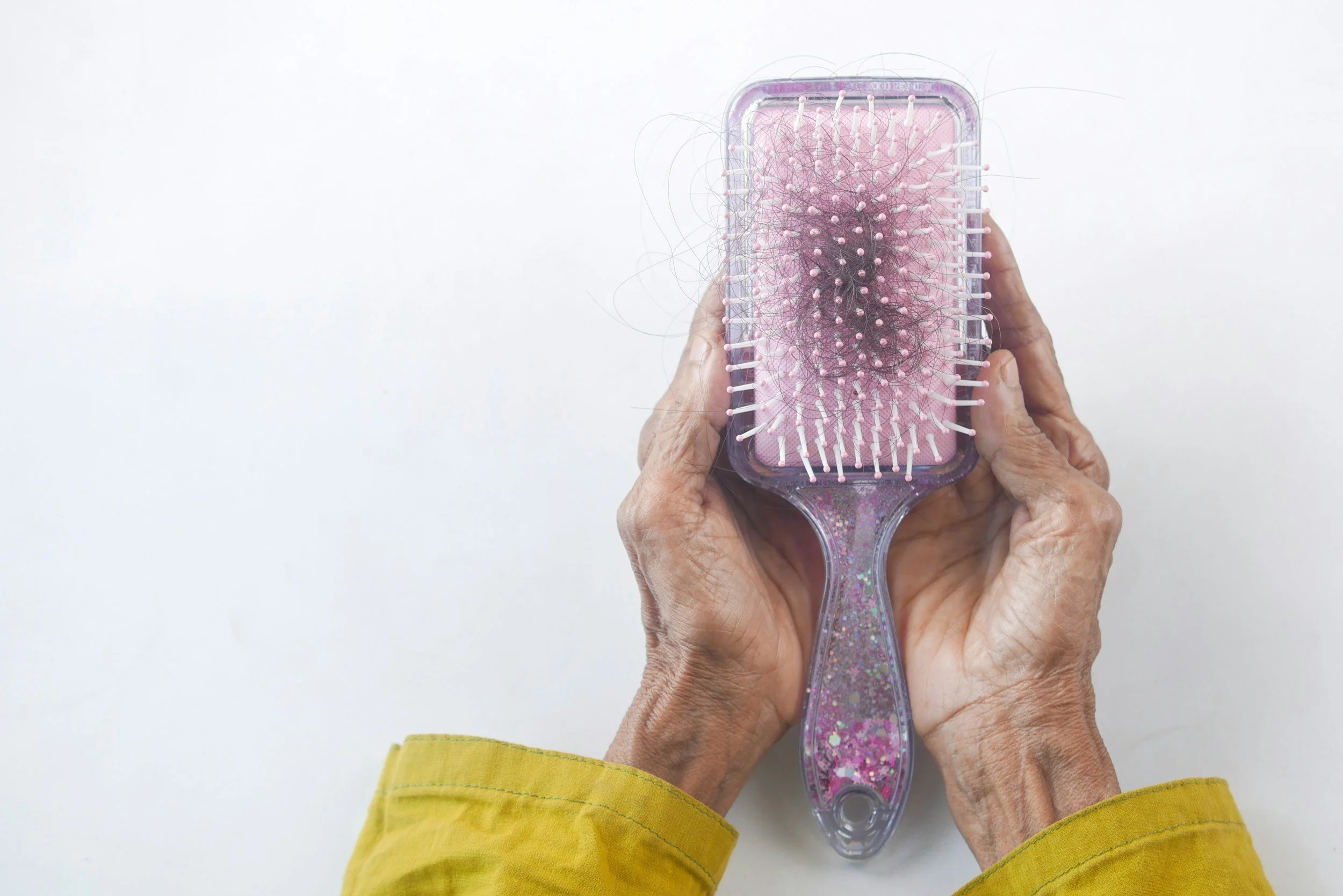
Hair loss conditions.
Telogen Effluvium.
Telogen Effluvium is a common and temporary form of hair shedding caused by a disruption in the normal hair growth cycle. Normally, only 10–15% of scalp hairs are in the telogen (resting) phase, but in telogen effluvium this number can rise significantly, leading to diffuse shedding.
This shift is often triggered by events such as:
Illness, infection, or high fever
Surgery or significant blood loss
Major physical or emotional stress
Postpartum hormonal changes
Thyroid imbalances
Nutritional deficiencies
Certain medications
Shedding typically begins 2 - 4 months after the triggering event. Telogen effluvium is usually self-limiting, and hair growth often recovers within 6 - 9 months once the underlying cause is corrected.
Chronic telogen effluvium may persist for longer and may need further investigation to understand the cause.
Androgenetic Alopecia (AGA)
Androgenetic Alopecia, also known as male/female pattern hair loss, is the most common cause of progressive hair thinning in both men and women. It is genetically determined and influenced by androgens (male hormones, particularly dihydrotestosterone – DHT). However in the women the cause may be more complex.
In AGA, hair follicles in genetically sensitive areas gradually miniaturise under the influence of DHT. This causes the growth phase of the hair cycle to shorten, producing progressively finer, shorter hairs until the follicle eventually stops producing visible hair.
Typical patterns:
Men: Receding hairline, thinning at the temples and crown, sometimes progressing to complete baldness on top of the scalp.
Women: Diffuse thinning over the crown and top of the scalp, usually with preservation of the frontal hairline.
Androgenetic alopecia is usually chronic and progressive, but early intervention can slow or halt the process.
Alopecia Areata
Alopecia Areata is an autoimmune condition where the body’s immune system mistakenly attacks the hair follicles, causing hair to fall out. This results in smooth, round or oval patches of hair loss, most commonly on the scalp but sometimes affecting eyebrows, eyelashes, or other body hair. It affects both men and women It can occur at any age but over 40% experience symptoms by age 20.
Alopecia areata can appear suddenly and may be triggered or worsened by stress, illness, or genetic susceptibility.
Key features:
Sudden, patchy hair loss
Smooth, non-scarring bald patches
“Exclamation mark” hairs (short broken hairs that are narrower at the scalp)
Possible regrowth — sometimes white or finer than before
Alopecia areata is unpredictable — hair may regrow on its own within months, but in some cases it can recur or progress to more extensive hair loss such as alopecia totallis or universalis although these forms are quiet rare.
Cicatricial Alopecia (Scarring Hair Loss)
Cicatricial Alopecia is a group of rare disorders that cause permanent destruction of hair follicles and replacement of follicular tissue with scar tissue. Unlike non-scarring alopecia, once the follicle is destroyed, regrowth is not possible.
Cicatricial alopecia’s can be primary, where the immune system directly targets the follicle, or secondary, where the follicle is destroyed by another process, such as infection, burns, or trauma.
Common features include:
Patchy hair loss with smooth, shiny areas
Redness, scaling, or pustules (in active cases)
Itching, burning, or pain in some cases
Permanent loss of follicles seen on dermoscopy or biopsy
Examples of primary cicatricial alopecia include lichen planopilaris (LPP), frontal fibrosing alopecia (FFA), discoid lupus erythematosus (DLE), and central centrifugal cicatricial alopecia (CCCA).
Early diagnosis and treatment are crucial to halt the inflammatory process and prevent further follicle loss.
Scalp Conditions
Dandruff (Pityriasis Capitis)
Dandruff is a common scalp condition characterized by excessive shedding of dead skin cells, leading to visible flakes in the hair and on clothing. It is usually caused by an imbalance of the scalps microbiome , which irritates the scalp and speeds up the natural skin cell turnover cycle. Most of us will experience this annoying condition in our lifetime.
Key clinical features:
White or yellowish flakes on the scalp and hair
Mild to moderate scalp itching
Oily or dry scaling, sometimes with mild redness
Seborrheic Dermatitis
Seborrheic Dermatitis is a common, chronic inflammatory condition affecting areas rich in sebaceous (oil) glands — including the scalp, face, and sometimes the upper chest. It is thought to be linked to an overgrowth of Malassezia yeast combined with a heightened inflammatory response.
Clinical features:
Red, inflamed patches with greasy, yellowish scales
Itching, burning, or soreness
Commonly affects scalp, eyebrows, sides of nose, ears, and beard area
May worsen in cold weather, during stress, or with hormonal changes
On the scalp, seborrheic dermatitis can appear as severe dandruff or more inflamed, scaly plaques.
Scalp Psoriasis
Scalp Psoriasis is a chronic, immune-mediated skin condition that affects the scalp, leading to the overproduction of skin cells. This results in thick, scaly plaques that can range from mild flaking to severe, widespread scaling.
Clinical features:
White or silvery scales on the scalp, often extending beyond the hairline
Red, inflamed skin beneath the scales
Itching, burning, or soreness
Possible temporary hair shedding due to inflammation or scratching
Scalp psoriasis is not contagious and can be triggered or worsened by stress, infections, cold weather, or certain medications. There is currently no cure for psoriasis but early and consistent treatment helps reduce symptoms and maintain scalp health.
FAQs
-
Trichology is the study of hair and scalp health. I help people figure out why their hair is thinning, falling out, or why their scalp is acting up — and then create a plan to fix it from the root cause, not just the surface.
-
There’s no one-size-fits-all answer. Hair loss can come from hormones, stress, diet, lifestyle, medical conditions, medications, or scalp issues. My job is to dig into your story and figure out what’s really happening.
-
Absolutely! Anyone experiencing hair or scalp concerns — from thinning hair to alopecia to scalp conditions like psoriasis or dandruff — can come in for a consultation.
-
We go through your hair history, health, diet, stress, and lifestyle. I’ll examine your scalp and hair, then we’ll create a personalised plan, which may include scalp treatments, light therapy, or guidance on nutrition and stress management.
-
It depends on the issue. Some people notice improvements in scalp health within weeks, while hair regrowth can take a few months. Patience and consistency are key — your hair needs time to respond.
-
Nope! You can book directly. But if we spot anything that needs medical attention, I’ll guide you on the next steps and liaise with your GP if needed.
-
While there’s no “one-size-fits-all cure,” identifying the root cause allows us to improve scalp health, reduce shedding, and support regrowth wherever possible. Most of the time, addressing internal factors makes a big difference.
-
I’m Donegal’s first dedicated trichologist — you don’t have to travel to Belfast, Sligo, or Dublin to get specialist care. I take a holistic approach, looking at the whole person, not just the hair on your head.